
Introduction
A dent in your vehicle can happen in seconds. A shopping cart rolls into a door, hail leaves small depressions across the hood, or another driver bumps your bumper in a crowded parking lot. Even a minor dent can make a well-maintained car look neglected, and some damage may be more than a cosmetic problem. The good news is that professional dent repair can address many types of vehicle dents, from shallow door dings to larger creases and certain forms of collision damage. The right repair method depends on the dent's size, depth, location, the condition of the paint, and whether the underlying panel has been stretched or damaged. Two common approaches are paintless dent repair (PDR) and traditional dent repair. PDR reshapes suitable metal panels without repainting, while conventional repair may involve filling, sanding, refinishing, or replacing damaged components. Understanding the difference between paintless dent repair and traditional body repair helps you make a more informed decision when your vehicle needs attention. For drivers in Austin, Kyle, Buda, San Marcos, and South Austin, a professional inspection can help identify the safest and most practical way to restore a vehicle's appearance after hail, parking lot damage, or a minor collision.
What Types of Vehicle Dents Can Professional Dent Repair Fix?
Professional dent repair can address many kinds of damage, but not every dent can be repaired using the same technique. The main factors are the condition of the paint, the shape of the dent, the material of the panel, and the amount of structural distortion.
Door Dings and Small Parking Lot Dents
Door dings are among the most familiar forms of vehicle damage. They often happen when someone opens a car door into an adjacent vehicle or when a shopping cart strikes a side panel. These dents are usually small and localized. If the paint remains intact and the metal has not been stretched significantly, paintless dent repair may be suitable. A technician uses specialized tools to carefully reshape the panel from behind or applies controlled pulling techniques from the exterior. The goal is to restore the original contour while preserving the factory paint.
Example: A shallow dent in the center of a passenger door with no paint cracking may be a good PDR candidate. A similar dent with chipped paint or a sharp crease may require conventional body repair. Learn more about what causes common car dents in everyday driving situations.
Hail Damage
Hail can leave numerous small dents across a vehicle's hood, roof, trunk, and other exposed panels. The damage may look minor from a distance but become obvious in direct sunlight or under overhead lighting. Paintless dent repair is often used for hail damage when the paint remains intact and the dents are suitable for reshaping. A technician evaluates the number of dents, their depth, spacing, and accessibility before recommending a repair plan. Severe hail can create deeper dents, cracked paint, damaged trim, or broken glass. Those problems may require a combination of PDR, conventional bodywork, refinishing, or glass replacement. After a hailstorm, avoid assuming that every visible dent needs repainting—or that every dent can be fixed without paint. A careful inspection is the best way to determine the appropriate method. Read more about how PDR helps repair hail damage without repainting your vehicle.
Creased Dents
A crease is a longer, narrow indentation rather than a rounded depression. It may form when a vehicle panel is scraped against another object or bent by an impact. Some shallow creases can be repaired with PDR, especially if the metal has not been stretched excessively and the paint is undamaged. However, sharp creases are often more difficult to correct because the metal has been compressed or distorted along a narrow line. The location matters, too. A crease near a panel edge, body line, or reinforced area may be harder to access and reshape. A technician may recommend conventional dent repair if the crease cannot be restored accurately with paintless techniques.
Bumper Dents and Minor Bumper Deformation
Bumpers frequently sustain damage in low-speed parking incidents. Depending on the vehicle, the outer bumper cover may be made of plastic or another flexible material rather than sheet metal. Some minor bumper dents can be reshaped using methods appropriate for the bumper material. Other cases require removal of the bumper cover, refinishing, or replacement if the material is cracked, torn, or badly deformed. Visible damage does not always tell the full story. A bumper may conceal broken mounting points, damaged brackets, or impact damage to components behind the cover. If a bumper has been pushed inward after a collision, have it inspected instead of treating the issue as purely cosmetic. Learn when a bumper can be repaired instead of replaced.
Large, Shallow Dents
A broad, shallow dent can affect a significant portion of a door, hood, or quarter panel without creating a sharp crease. These dents may result from pressure against a large object, a minor collision, or falling debris. Some large dents are good candidates for paintless dent repair because the metal has not been sharply folded and the paint remains intact. Their size alone does not automatically make them unsuitable for PDR. However, a broad dent may involve stretched metal or subtle distortions that require extensive correction. If the panel cannot be restored to its original shape with PDR, traditional body repair may produce a better result.
Body Line Dents
Many vehicles have raised or recessed character lines running along the doors, fenders, and other panels. These lines contribute to the vehicle's overall styling, but dents that cross them can be challenging to repair. A dent along a body line may flatten the contour or create a visible ripple. Restoring the original shape requires careful control because the technician must recreate both the surrounding surface and the defined line. PDR may be possible when the paint is intact and the deformation is manageable. Deeper damage, sharp folds, or stretched metal may call for conventional repair.
Fender and Quarter Panel Dents
Fenders and quarter panels can be damaged by parking mishaps, road debris, or collisions. These areas vary in shape and accessibility, so the repair method depends on the vehicle's design and the severity of the impact. A shallow dent on an accessible fender may be suitable for PDR. Damage near a wheel arch, panel edge, or complex contour can be more difficult to correct. Quarter panels may also be integrated into the vehicle's body structure rather than attached as easily removable panels. Significant damage in these areas deserves a broader assessment to check for related body or structural issues.
What Is Paintless Dent Repair?
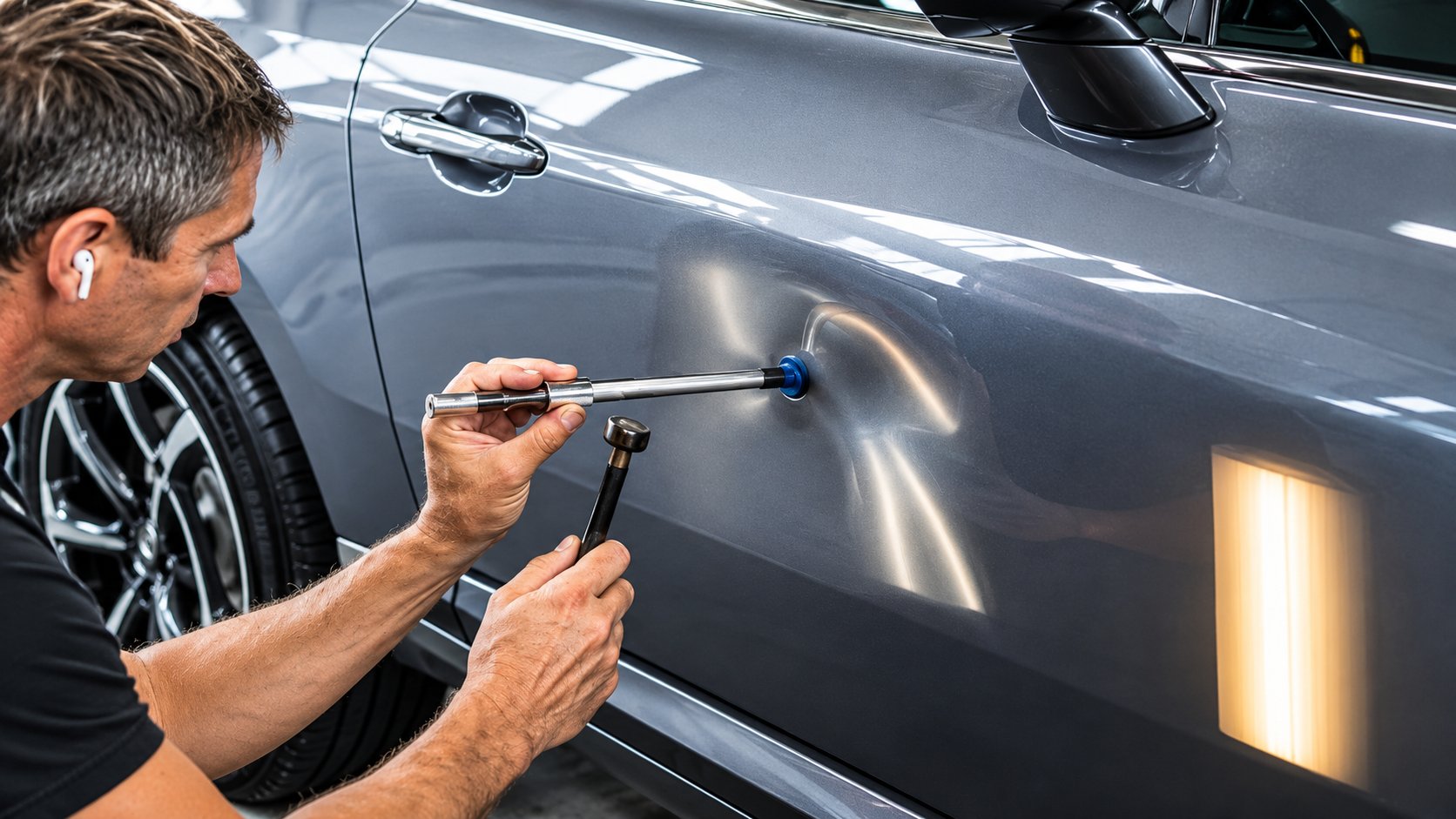
Paintless dent repair, commonly called PDR, is a method of reshaping suitable vehicle panels without sanding, applying body filler, or repainting the repaired area. Technicians use specialized rods, picks, lighting, and other tools to apply controlled pressure to the back of a panel or use carefully placed pulling tabs on its exterior. The metal is gradually returned toward its original contour.
When Is PDR the Best Option?
PDR is generally most appropriate when:
The paint is intact and has not cracked or flaked.
The dent is not excessively deep or sharply folded.
The metal has not been stretched beyond what can be corrected.
The technician can access the damaged area or use a suitable pulling method.
The panel can be restored without compromising its finish.
PDR can preserve the original factory paint, which is one of its main advantages. It may also avoid some of the materials and refinishing steps involved in traditional body repair. However, PDR is a specialized process, not a guarantee that every dent can be repaired without painting. The technician must assess the actual damage before confirming suitability. Explore why paintless dent repair is a popular choice for small damage.
What Happens During a PDR Appointment?
A typical paintless dent repair process involves several steps.
1. Inspect the damage. The technician examines the dent's depth, shape, location, and surrounding paint.
2. Assess access. They determine whether tools can reach the back of the panel or whether an exterior pulling technique is more appropriate.
3. Map the dent. Specialized lighting helps reveal high and low spots that may be difficult to see under ordinary lighting.
4. Reshape the metal. The technician applies controlled pressure or pulling force in small increments to gradually restore the panel's contour.
5. Check the finish. The repaired area is inspected from different angles to identify remaining distortions.
The time required depends on the dent's complexity, the panel's construction, and how many areas need attention. Multiple hail dents can require a more extensive assessment than a single shallow door ding. You can also read about what happens during a professional dent repair process.
When Does a Dent Require Traditional Body Repair?
Paintless dent repair is not the right choice for every situation. Traditional dent repair may be necessary when the damage affects the paint, significantly distorts the metal, or involves components that cannot be restored through PDR.
Dents With Cracked, Chipped, or Scratched Paint
PDR reshapes the panel but does not restore missing paint. If the impact has chipped the finish down to the primer or exposed bare metal, the repair may require paintwork to restore the surface and protect the metal. A technician may use conventional repair methods to smooth the damaged area, prepare it for refinishing, and apply a matching paint system. The exact process depends on the depth and extent of the damage. Small scratches and dents sometimes occur together, so have both evaluated rather than requesting dent removal alone. Read more about how auto body shops match factory paint colors accurately.
Deep Dents and Stretched Metal
A deep dent can force the metal beyond its normal shape. If the panel has stretched or folded sharply, simply pushing it outward may not restore the original contour. Conventional repair may involve reshaping the panel, applying body filler where appropriate, sanding, priming, and repainting. In some cases, replacement is the more suitable option. The aim is not just to make the dent less noticeable. The repaired panel should have an appropriate shape, finish, and fit.
Dents Near Structural or Safety Components
Damage near pillars, door beams, frame rails, suspension mounting points, or other structural areas should not be treated as an ordinary cosmetic dent without inspection. A collision can affect alignment or safety-related components even when the exterior damage appears limited. A professional may need to assess structural measurements, mounting points, and related systems before recommending repairs. If a collision has affected the vehicle's frame or unibody structure, specialized collision repair may be necessary. Cosmetic dent removal alone is not an adequate substitute for structural evaluation. Learn how hidden damage can affect your vehicle after an accident.
Plastic Panels and Cracked Components
Some vehicles use plastic or composite panels that behave differently from steel or aluminum. Repair options depend on the material, the location of the damage, and the manufacturer's repair guidance. A small deformation may be repairable, while a crack, split mounting tab, or badly damaged panel may require specialized repair or replacement. The same assessment applies to bumper covers and certain exterior trim components.
What Factors Determine Whether a Dent Can Be Repaired?
A professional evaluates more than the dent's visible size. Several factors influence the repair method, expected result, and cost.
Dent Size, Depth, and Shape
A small, rounded dent with smooth edges is often easier to repair than a deep dent with a sharp crease. Large dents may still be suitable for PDR if the metal and paint remain in good condition. Depth and shape matter because they indicate how the panel has deformed. A technician also checks for subtle high spots around the impact area.
Paint Condition
Intact paint increases the likelihood that PDR will be appropriate. Cracked, chipped, or peeling paint usually requires additional refinishing work. Previous body repairs can also affect the decision. Repainted panels or areas with substantial filler may respond differently to reshaping than panels with undamaged factory finishes.
Panel Material and Location
Steel and aluminum have different properties, and some panels are harder to access than others. A dent near a reinforcement, seam, edge, or body line can require more specialized work. The technician may need to remove interior trim, a liner, or another component to reach the damaged area. This adds complexity even when the dent itself looks small.
Number of Dents and Related Damage
A single door ding is different from dozens of hail dents spread across a vehicle. Multiple dents require a broader inspection and may involve several panels. The technician should also check for broken trim, damaged glass, misaligned panels, or other issues caused by the same event. Repairing only the visible dent may leave related damage unresolved.
How Much Does Professional Dent Repair Cost?
Dent repair costs vary with the damage and the method required. There is no reliable single price for all dents because a shallow door ding and a deep collision dent involve different amounts of work.
The main cost factors include:
Size and depth: Larger or deeper dents generally require more correction.
Location: Dents near edges, body lines, or difficult-to-access areas may take longer.
Paint damage: Traditional refinishing adds preparation and painting steps.
Panel material: Steel, aluminum, plastic, and composite panels may require different methods.
Number of dents: Hail damage or several damaged panels can increase the scope of the job.
Hidden damage: Additional repairs may be needed if inspection reveals related problems.
When comparing estimates, ask what the proposed repair includes. Clarify whether paintwork, parts, trim removal, and any related collision repairs are included, and ask how the shop will handle damage discovered during the work. A low estimate is not necessarily the best value if it excludes necessary repairs. A useful estimate explains the repair method and identifies any uncertainties that cannot be resolved until the vehicle is inspected.
How to Prepare Your Vehicle for a Dent Repair Inspection
A little preparation can help the technician assess the damage and give you a clearer estimate.
Document the Damage
Take photographs in good lighting from several angles. Include a close-up of the dent and a wider photo showing its location on the vehicle. For hail damage, photograph each affected panel and keep any insurance-related documentation. Photos can help with an initial estimate, but they may not reveal every detail of the damage.
Explain How the Dent Happened
If you know the cause, tell the repair shop. Information about a parking impact, hailstorm, or collision can help the technician look for related damage. Mention any warning lights, unusual noises, door alignment problems, or difficulty opening and closing panels. These symptoms may indicate issues beyond the visible dent.
Ask About the Proposed Repair Method
Ask whether the shop recommends PDR, traditional dent repair, panel replacement, or a combination of methods. A clear explanation should describe why the chosen method suits the damage. If insurance is involved, ask how the estimate will be documented and whether the shop can assist with communication with the adjuster. An initial photo estimate may need to be updated after an in-person inspection. For more information, read how insurance claims work for auto body repairs in Texas.
Choosing a Professional Dent Repair Shop in the Austin Area
Choosing a repair shop involves more than finding someone who can make a dent look better. The shop should assess the damage carefully, explain the repair options, and identify any related issues that may affect the vehicle's condition. Look for a shop that can explain the difference between PDR and conventional body repair, provide a clear estimate, and discuss the expected finish. Ask how it handles paint matching, damaged panels, and any structural concerns identified during inspection. Drivers in Austin, Kyle, Buda, San Marcos, and South Austin can consider MD AUTO for dent repair and related auto body services. The shop offers paintless dent repair, collision repair, auto painting, bumper work, and frame-related services, along with free repair estimates and photo estimates. Its technicians use OEM-approved repair methods and PPG paint systems, according to the service information provided. Before authorizing work, confirm the scope of the estimate, the recommended repair method, and whether additional damage could change the plan. For collision-related dents, make sure any necessary structural and safety inspections are included. You can also review what drivers should know before choosing an auto body shop.
Have a dent, door ding, or hail damage on your vehicle? Contact MD AUTO for a professional assessment and a free repair estimate. Serving drivers in Austin, Kyle, Buda, San Marcos, and South Austin, MD AUTO can evaluate the damage, explain whether PDR or traditional body repair is appropriate, and help you understand the next steps. Share clear photos for a photo estimate or arrange an inspection for a closer assessment. Get started by asking about a professional auto body inspection.
Conclusion
Professional dent repair can fix many types of vehicle dents, including door dings, hail dents, shallow creases, body line dents, and some bumper or fender damage. Paintless dent repair is often suitable when the paint is intact and the metal can be reshaped without extensive correction. Dents with damaged paint, severe deformation, cracked components, or possible structural damage may require traditional bodywork or additional collision repairs. The best way to choose the right method is to have the dent inspected rather than judging it by size alone. Ask the technician to explain the damage, compare suitable repair options, and provide an estimate that clearly identifies the work involved. Addressing the damage early can also help you identify related paint, body, or safety concerns before they become more complicated. For drivers in the Austin area, MD AUTO can assess your vehicle and help determine whether a dent can be corrected with PDR or needs a more comprehensive repair.
Don't let dents and dings diminish your vehicle's appearance. Contact MD AUTO today to request a free estimate and discuss your repair options. A professional assessment can help you understand the recommended approach and make an informed decision about restoring your vehicle.
Frequently Asked Questions
1. What types of dents can paintless dent repair fix?
PDR can often fix shallow door dings, suitable hail dents, small parking lot dents, and some broad or creased dents when the paint remains intact and the metal has not been excessively stretched. A technician must inspect the dent's depth, location, and accessibility before confirming whether PDR is appropriate.
2. Can a deep dent be repaired without repainting?
Sometimes, but not always. A deep dent may qualify for PDR if the paint is intact and the metal can be reshaped. Sharp folds, stretched metal, or cracked paint may require conventional body repair and refinishing.
3. Can paintless dent repair fix hail damage?
Yes, PDR is commonly used for suitable hail dents when the paint remains intact. Extensive hail damage may require work across multiple panels, and cracked paint, broken glass, or deeper impacts may need additional repairs.
4. Can a dent in a plastic bumper be repaired?
Some minor bumper deformations can be reshaped, depending on the material and damage. Cracks, torn plastic, broken mounting points, or severe deformation may require specialized repair or bumper replacement.
5. Is paintless dent repair better than traditional dent repair?
Neither method is best for every situation. PDR can preserve factory paint when the damage is suitable, while traditional dent repair is more appropriate for many dents involving damaged paint, severe deformation, or components that need refinishing or replacement.
6. How long does professional dent repair take?
Repair time depends on the dent's size, depth, location, and complexity, as well as the number of damaged panels. A small dent may require much less work than widespread hail damage or a collision repair involving paint and parts.
7. Does dent repair remove scratches too?
PDR reshapes metal but does not repair scratches or replace missing paint. If the dent includes chipped paint, deep scratches, or exposed metal, refinishing or another repair method may be necessary.
8. Can a dent be repaired if the paint has cracked?
The metal may still be repairable, but PDR generally does not restore cracked paint. A technician may recommend conventional dent repair and repainting to restore the panel's appearance and protect exposed material.
9. How much does it cost to repair a car dent?
The cost depends on the dent's size, depth, location, paint condition, panel material, and repair method. Request an estimate based on an inspection, and ask whether paintwork, parts, and related damage are included.
10. Should I repair a dent after a minor accident?
It is worth having the vehicle inspected if the impact caused more than a superficial mark or if panels no longer align properly. A minor-looking dent can sometimes conceal damage to bumper mounts or other components, so an assessment can help identify the appropriate repair. Read what to do immediately after a car accident before visiting an auto body shop.
